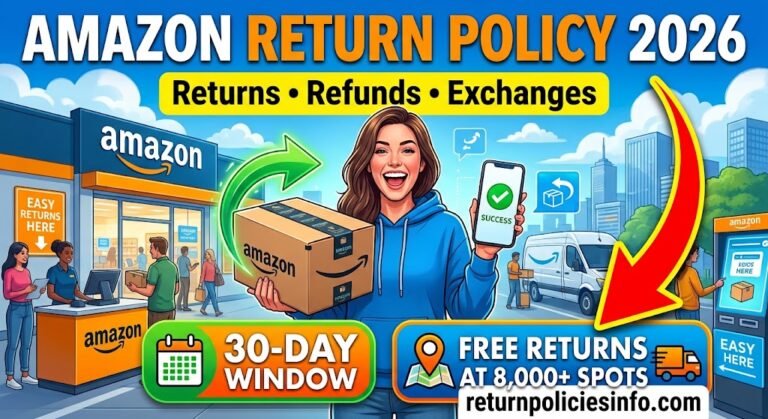
Amazon’s return policy is your return policy. That is the rule behind every Amazon seller return policy question.
What is the standard return window? Most items bought on Amazon.com can be returned within 30 days of delivery. This includes seller-fulfilled (FBM) items. Some categories have different windows, so check the policy for your product type.
How long does a buyer have to ship the item back? After Amazon authorizes a return, the buyer usually gets 15 days to send it. That period begins after the return window closes. Amazon Return Policy for Third-Party Sellers
Where do sellers manage returns? In Seller Central, go to Manage Returns. You can review, authorize or decline requests there.
What changed in 2026? On January 26, 2026, Amazon updated the FBM refund process. For returns that did not get a refund at first scan, sellers now have 4 calendar days to refund after receiving the item. Before, the limit was 2 business days. Amazon also said Refund at First Scan is not being removed.
Tip: Policy details shift often. Read your Seller Central headlines every few weeks.
Table of Contents
How Amazon Returns Work for FBM and FBA Sellers
Returns follow a set path from request to refund. Knowing each step stops most surprises.
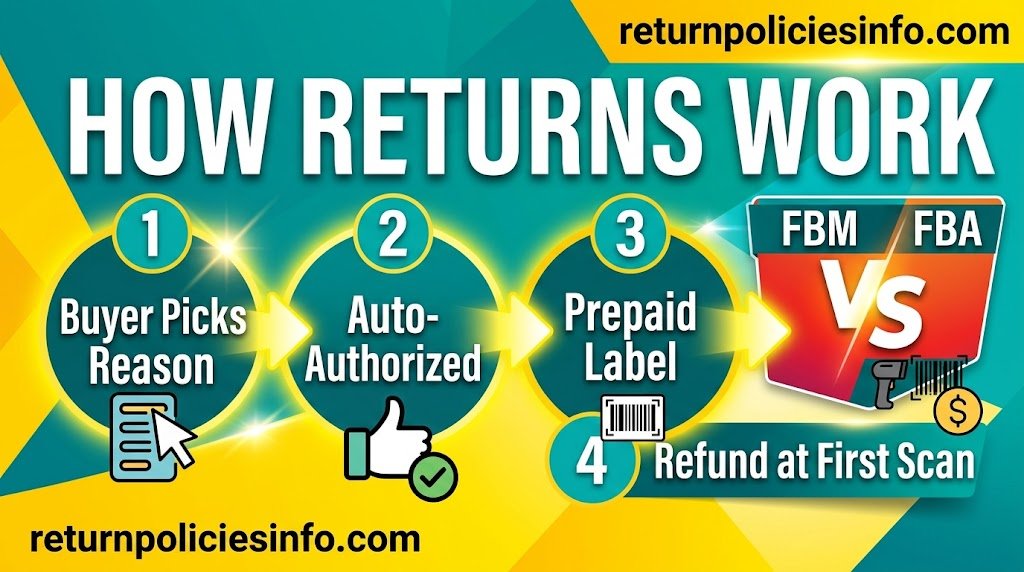
Step 1: The buyer picks a reason. The buyer starts a return and chooses a reason from a list.
Step 2: Amazon auto-authorizes it. Amazon automatically approves US requests that fall inside its policy. Requests that are out-of-policy or category-exempt go to the seller for manual authorization. Amazon Return Policy for Third-Party Sellers
Step 3: Amazon issues a prepaid label. The Amazon Prepaid Return Label program gives the buyer a label. The buyer drops the package at a carrier location.
Step 4: Refund at First Scan (RFS). The buyer is refunded after the carrier’s first scan. Amazon extended RFS to sellers using prepaid labels. The seller gets a refund notification email, often before the item arrives.
That is why many sellers see a refund with “no request, no reason.” Amazon support has explained it the same way in this seller thread. The return was auto-authorized, and the refund fired at first scan.
FBM versus FBA:
FBM: Returns come back to you. You inspect the item and absorb the loss if it is unsellable.
FBA: Amazon receives the return and checks its condition. Defective or customer-damaged units must be removed from inventory within a set time.
Where to track it: Watch the Refunds block on your dashboard. Use the return tracking number in the email to follow the package.
Understanding third-party seller rules is essential, but Amazon’s return process also includes general guidelines for return windows, refunds, and exchanges. For a complete overview, explore this Amazon returns and refunds guide for 2026 to understand the key policies before initiating a return.
Amazon Refund Rules for Sellers: Concessions, Partial Refunds and Restocking Fees
You do not always owe a 100% refund. Amazon gives sellers a few tools to limit losses.
When should you refund? If you want the item back, Amazon encourages you to wait until it arrives. Then you can judge its return condition. Amazon’s own seller reply on this point is in this forum thread.
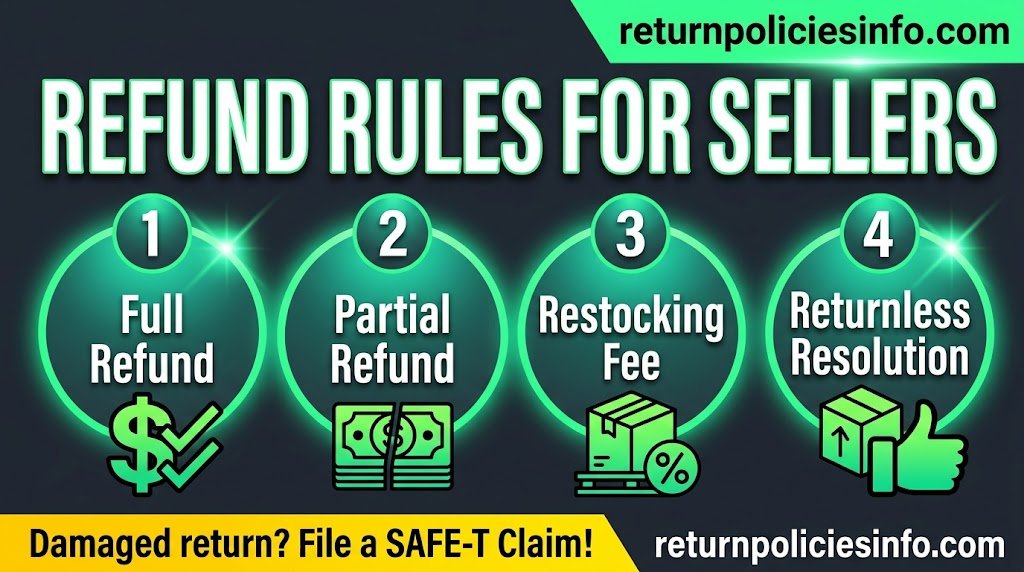
Your options:
Full refund: Best when the item is returned in good shape.
Partial refund or concession: Good for used, opened or slightly damaged items.
Restocking fee: You may charge it for damaged or materially different returns.
Returnless resolution: The buyer gets a refund and keeps the item. This suits items that can’t be returned.
For the full process, see Amazon’s guide to refunds and concessions for seller-fulfilled orders.
Protect yourself with SAFE-T: If an RFS return arrives damaged or materially different, you may file a SAFE-T claim. Amazon has said these refunds remain eligible for reimbursement. Keep photos of the item as proof.
Quick decision guide:
Item is fine and resellable: refund in full.
Item is opened or worn: consider a partial refund.
Item is damaged or not as sent: file a claim.
Item can’t be returned: use a returnless resolution.
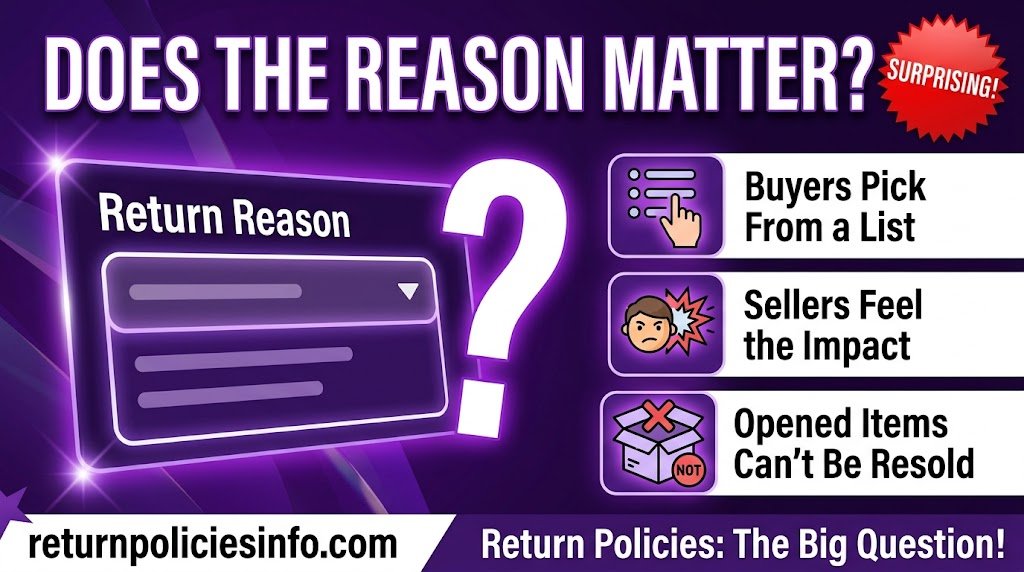
Does the Return Reason Matter? No-Reason Returns Explained
Yes, it matters. Not for the buyer’s right to return, but for what happens next.
Do buyers need a detailed reason? No. The buyer selects one option from a list. There is no long explanation to write. In practice, a buyer can return most items inside the window.
Why the reason still counts for sellers:
It shapes how the return is labeled in your reports.
It can affect whether a damage claim is possible.
It helps you spot patterns, such as “wrong size” or “not as described.”
The “no reason” problem: Sellers of $50 to $500 items often report that buyers order the wrong product, open it, then return it. Amazon refunds the buyer. The seller can’t resell an opened item and eats the cost. Sellers share these cases in forums like this one.
Rent-and-return abuse: Some returns are authorized but never mailed back for months. Track these. Report patterns to Seller Support with order IDs.
While Amazon’s electronics return policy covers many product-specific rules and exceptions, the process can differ when you purchase from independent sellers on the platform. Understanding Amazon’s third-party seller return rules can help you determine your return eligibility, refund options, and the steps to take if a seller’s policy differs from your expectations.
How to Reduce Returns and Protect Your Seller Account
You can’t stop returns. You can shrink them, and you can cap the damage.
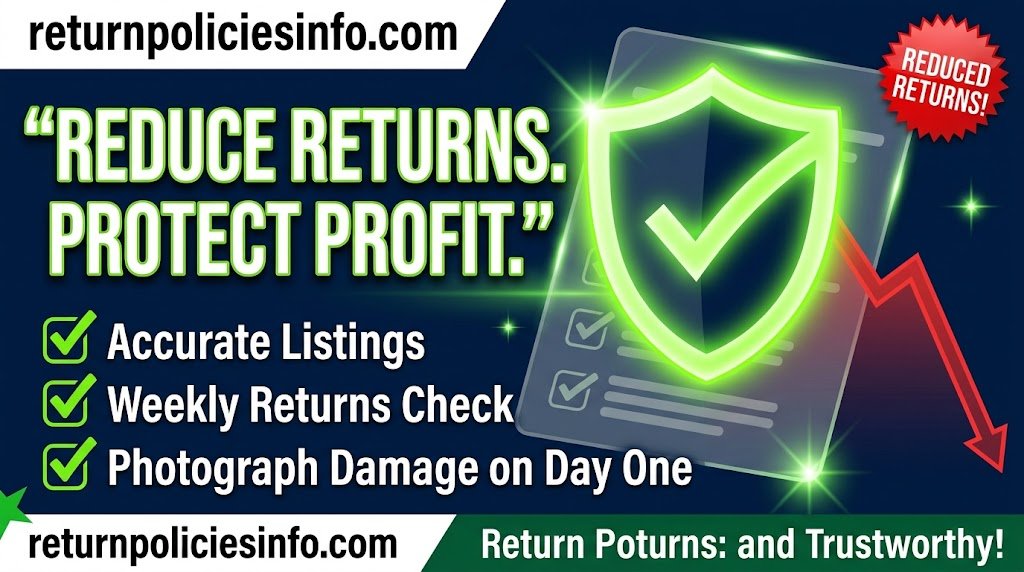
Cut returns at the source:
Write accurate listings with exact sizes, specs and compatibility notes.
Use clear photos from several angles.
Add a size chart or a “what’s in the box” line.
Pack well to avoid shipping damage.
Protect your margins:
Add expected return costs to your pricing and profit math.
Review return reasons weekly in Seller Central.
Use SKU-level return settings where Amazon allows them. Exemption rules change, so confirm current terms before you rely on them.
Get your labels right: Wrong dimensions, weight or return address cause trouble with prepaid return labels. Keep your product data and return address current.
Weekly checklist for FBM sellers:
Check Manage Returns and the Refunds block.
Inspect returned items fast.
Photograph damage on day one.
File SAFE-T claims quickly.
Read Seller Central headlines for policy updates.
FAQs
Can I return something to Amazon for no reason?
Yes, in most cases. Most items can be returned within 30 days of delivery. The buyer picks a reason from a list and does not need to explain further. Some categories have different rules.
Why did I randomly get an Amazon refund?
Most often, it is Refund at First Scan. Amazon auto-authorized a return and refunded the buyer when the carrier first scanned the package. Sellers see it as a refund notification with no request. Check the Refunds block and your email for the return tracking number.
Do you need a reason to return to Amazon?
You choose a reason from a dropdown list when you start the return. You do not need to write a detailed explanation. The choice you make can affect return handling and claims.
Does Amazon return reason matter?
Yes. For buyers, it is quick and simple. For sellers, it can affect return labels, damage claims and the way returns show in reports. It does not remove the buyer’s right to return inside the policy.
Conclusion
Amazon’s return rules favor the buyer, and sellers must match them. You can’t stop returns, but you can manage them. Know the 30-day window, learn how Refund at First Scan works, and use partial refunds and SAFE-T claims when needed. Strong listings and a weekly return check protect both your Amazon third-party seller returns and your margins.
Abroy William is a consumer rights researcher and retail policy strategist with over a decade of experience analyzing corporate refund frameworks, consumer protection laws, and retail supply chains across North America.